
The Healthy Observer
  • Food
  • Health Highlights
  • Health News
  • Mental Health
  • Sleep Health
  • Wellness Path
Subscribe
No Result
View All Result
  • Food
  • Health Highlights
  • Health News
  • Mental Health
  • Sleep Health
  • Wellness Path
Subscribe
No Result
View All Result
The Healthy Observer
No Result
View All Result
Home Wellness Path

Are Reduced-Fat and Low-Sugar Foods Actually Healthier? Experts Weigh In

1 month ago
in Wellness Path
Reading Time: 3 mins read
Are Reduced-Fat and Low-Sugar Foods Actually Healthier? Experts Weigh In
Share on FacebookShare on Twitter

How Do You Decide if Regular or Reduced-Fat Food Is the Healthier Choice?

“A claim on the front of a package is a spotlight, not a report card,” says Anjali Srivastava, MD, a global health and lifestyle medicine physician in Potomac, Maryland.

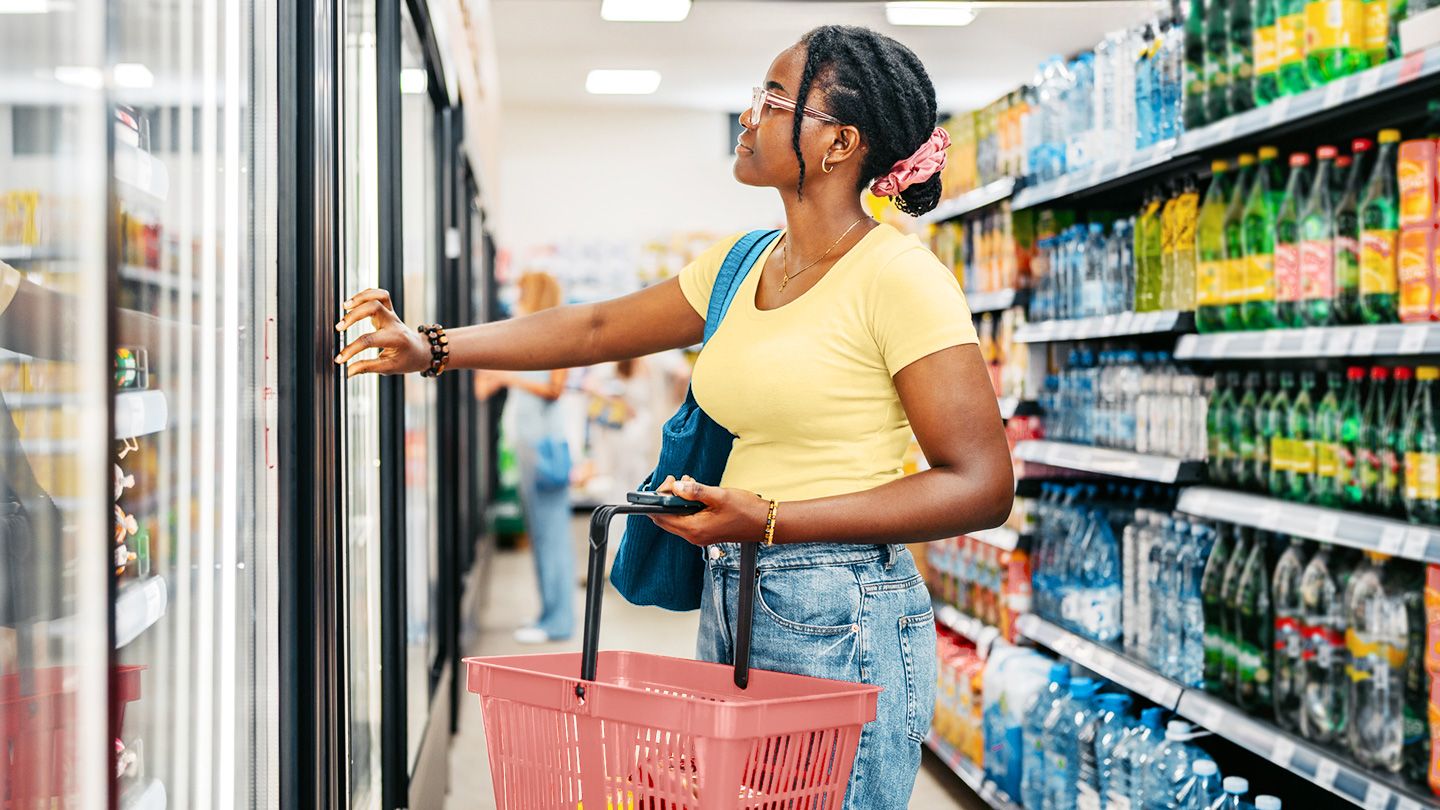
Experts recommend turning the package over and comparing Nutrition Facts labels, starting with serving size. From there, look beyond the advertised nutrient to see whether nutrient content like saturated fat, sodium, or added sugar differs between products.

[3]

Related articles

Surprise Mutation Driving Early Start to Flu Season

How to Exercise Safely With C3G

The U.S. Food and Drug Administration’s (FDA) Percent Daily Value (%DV) offers a shortcut: 5 percent DV or less of a nutrient per serving is considered low, while 20 percent or more is considered high.

[4]

“Flip the package over, match the serving sizes, and ask: Which of these am I most likely to overdo today?” Dr. Srivastava says.

That means a reduced-fat version of a food isn’t automatically the better choice. For example, with a product like reduced-fat sour cream, you’ll want to compare it with the regular version to see how much fat actually decreased and whether sodium, added sugar, or other nutrients differ.

If you only eat a small amount of sour cream, this distinction may not matter much. “At a 1- to 2-tablespoon portion, the real difference is small — and how much you spoon on matters more than which tub you bought,” Srivastava adds.

Individual health needs can also influence the decision. Someone with high LDL (or “bad”) cholesterol may pay close attention to saturated fat, while someone with high blood pressure may focus on sodium.

“It makes sense to focus on what matters most for your health,” says Kelly L. Burgess, RDN, a founder of To Better Health in Woodbury, New Jersey. She recommends that consumers look beyond words like “reduced,” “no,” and “free.”

“Buying a car based on its paint job without looking under the hood won’t tell you what condition it’s in,” Burgess says. “A single-nutrient claim on the front of a package is similarly incomplete.”

Should You Just Avoid These Health-Hyped Foods Altogether?

Given how confusing it can be to understand health claims on product labels, you might wonder whether the takeaway is to simply avoid these foods altogether.

The study wasn’t designed to answer this question directly. But Burgess says the findings don’t necessarily mean a reduced-fat or reduced-sodium product has no place in an overall balanced diet.

“A product labeled ‘reduced fat’ or ‘reduced sodium’ can still fit into a healthy diet, but the claim alone does not tell you how processed the food is or whether it is a good choice overall,” she adds.

Burgess generally recommends making whole or minimally processed foods the foundation of your diet and considering packaged products in the context of your overall eating pattern.

Study Has Limitations

The study has several limitations. It analyzed newly launched products in a commercial database, rather than every packaged food on store shelves or the most commonly purchased items. It also used the UK Nutrient Profiling Model, which has specific thresholds for classifying foods and beverages as “less healthy.” And it was descriptive, meaning it can’t establish that reducing one nutrient caused another to increase.

In addition, the researchers underscore that their findings don’t mean nutrition claims are inaccurate or don’t meet labeling regulations.

“A claim can accurately describe a specific attribute of a product while still providing only partial information about its overall nutritional quality,” Dr. Zhou says. “The most important takeaway is that a single attribute-based claim tells consumers about that specific attribute, but does not necessarily indicate the product’s overall healthfulness.”

For grocery shoppers, that means treating a claim on the front of a food package as a starting point, rather than a conclusion.

“A claim tells you where to look, not what to decide,” Santiago says. “Check the Nutrition Facts label and ingredient list against what actually matters for your health, and the claim has done its job.”


ShareTweetPin

Related Posts

Surprise Mutation Driving Early Start to Flu Season

Surprise Mutation Driving Early Start to Flu Season

by admin
October 25, 2026
0

A Mutation Detected Early in Japan May Explain Flu Rise in the WestSeveral news sources have reported that G155E is likely causing a severe, early spike...

How to Exercise Safely With C3G

How to Exercise Safely With C3G

by admin
October 23, 2026
0

“There isn’t one form of exercise that’s uniquely beneficial for C3G,” says LeCavalier. Research on exercise and C3G itself is limited. But in people with chronic...

Hormone Therapy Plus GLP-1s May Lead to Better Weight Loss for Menopause

Hormone Therapy Plus GLP-1s May Lead to Better Weight Loss for Menopause

by admin
October 21, 2026
0

Tirzepatide Yielded Similar Amounts of Weight Loss, With or Without Hormone TherapyWomen taking tirzepatide plus hormone therapy also experienced faster weight loss at the beginning than...

The Tropical GLP-1 Smoothie That Works Harder Than It Looks

The Tropical GLP-1 Smoothie That Works Harder Than It Looks

by admin
October 20, 2026
0

Most tropical smoothies are basically dessert in a cup: delicious, a lot of sugar, and hungry again in an hour. This one is built differently. It...

OTC Meds to Use With Caution When You Have Obstructive Sleep Apnea

OTC Meds to Use With Caution When You Have Obstructive Sleep Apnea

by admin
October 19, 2026
0

Obstructive sleep apnea (OSA) happens when the muscles in your throat relax too much during sleep, causing your airway to narrow or close and briefly cut...

Next Post
Protein-rich berry breakfast bowl with text reading "Why am I gaining weight in menopause? The real reasons and what actually helps" — The Nutrition Twins

Menopause & Perimenopause Weight Gain: Real Causes

FDA nominee Overton parries vaccine questions at Senate hearing

FDA nominee Overton parries vaccine questions at Senate hearing

Is Your Supplement Routine Actually Working? This Device Will Tell You in 15 Seconds

Is Your Supplement Routine Actually Working? This Device Will Tell You in 15 Seconds

    Get daily news updates to your inbox!

    CATEGORIES

    • Food
    • Health Highlights
    • Health News
    • Mental Health
    • Sleep Health
    • Wellness Path

    RECOMMENDED

    How to Build a Dry Skin Routine
    Health Highlights

    How to Build a Dry Skin Routine

    October 2, 2026
    6 Best Dove Products of 2026 for Smooth Skin from Head to Toe
    Health Highlights

    6 Best Dove Products of 2026 for Smooth Skin from Head to Toe

    October 24, 2026
    The Healthy Observer

    Your trusted source for simple, reliable tips to live healthier, feel better, and thrive every day.

    Copyright © 2026 thehealthyobserver.com | All Rights Reserved

    • Contact us
    • Privacy Policy
    • Terms & Conditions
    • Email Whitelisting
    • Food
    • Health Highlights
    • Health News
    • Mental Health
    • Sleep Health
    • Wellness Path

    Copyright © 2026 thehealthyobserver.com | All Rights Reserved